

Visual Information Processing Evaluation
Understanding How the Brain Interprets Visual Information
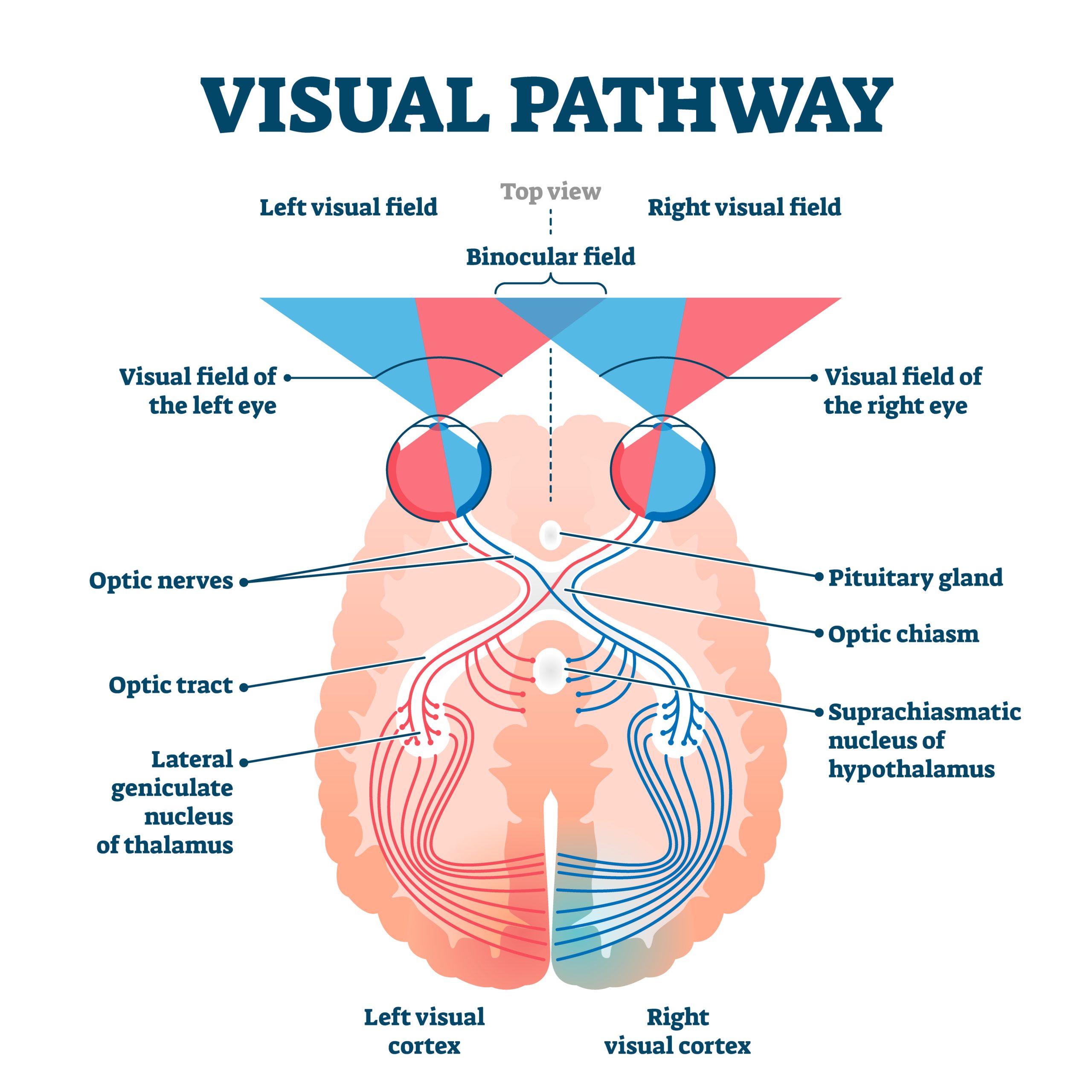
A Visual Information Processing (VIP) Evaluation examines how the brain analyzes and interprets visual information received through the eyes. While the eyes capture images, it is the brain that organizes, interprets, and gives meaning to what we see.
This evaluation is often recommended for children who are bright and capable but struggle with reading efficiency, copying from the board, handwriting, or visual organization at school.
Many children referred for this evaluation are motivated learners who simply process visual information differently. These challenges can occur even when a child has normal eyesight.
A Visual Information Processing Evaluation helps identify whether visual processing skills are developing as expected or whether additional support may be beneficial.
Vision and Learning
Vision plays an important role in learning. Many classroom tasks rely heavily on visual skills such as reading, writing, copying, remembering visual information, and coordinating eye movements across a page.
When visual processing skills are not functioning efficiently, children may work harder than their peers despite having strong intelligence and motivation. Identifying these challenges early allows for targeted support and appropriate recommendations.
Signs a Visual Information Processing Problem May Be Present
Children with visual information processing difficulties may demonstrate:
- Difficulty using both sides of the body together or independently
- Difficulty distinguishing right from left
- Difficulty identifying the orientation of letters or objects
- Losing place while reading
- Skipping lines when reading
- Difficulty copying from the board to paper
- Trouble remembering visual information
- Challenges with eye-hand coordination tasks
What to Expect During the Evaluation
The Visual Information Processing Evaluation typically requires 1 to 1.5 hours of testing. During this time, a series of standardized assessments are used to evaluate how visual information is processed and integrated.
After Testing Is Completed:
- Results are carefully scored and analyzed
- A detailed written report is prepared
- A 45-minute parent conference is scheduled approximately one week later to review findings and recommendations
Recommendations May Include:
- Optometric vision therapy
- Classroom accommodations
- Collaboration with other professionals such as tutors, psychologists, neuropsychologists, or occupational therapists
Skills Evaluated During the Assessment
Eye Tracking (Oculomotor Skills)
The ability of the eyes to move accurately and efficiently across a line of text while reading. Poor eye tracking can contribute to losing place, skipping lines, or slow reading.
Bilateral Integration
The ability to use both sides of the body together and independently. Difficulties in this area may affect coordination and fine motor skills.
Laterality
Understanding right and left on one’s own body.
Directionality
Recognizing right and left orientation of objects and symbols, which is important for reading and writing.
Visual Perception
The ability to analyze and interpret visual information from the environment. Weaknesses in this area may affect reading, spelling, handwriting, math, and comprehension.
Copying Skills
The ability to accurately transfer visual information from one location to another, such as copying from the board to paper.
Visual Memory
The ability to remember visual information for immediate recall, supporting reading and learning.
Visual-Motor Integration
How visual information guides motor actions, such as drawing or copying shapes. Difficulties in this area may influence tasks like handwriting. When appropriate, collaboration with an occupational therapist may be recommended to address handwriting or fine-motor skill development.
Schedule a Visual Information Processing Evaluation
If your child continues to struggle with reading, copying, handwriting, or visual organization despite effort and support, a Visual Information Processing Evaluation can provide important insight into how their visual system supports learning. Please contact our office at 781-829-9400