Myopia Management
Myopia, also called nearsightedness, means a child can see nearby objects clearly while distant objects appear blurry. Myopia is commonly measured using a glasses or contact lens prescription, expressed in units called diopters (D). Prescriptions that correct myopia typically begin with a minus (–) sign.
A prescription tells us how much correction your child needs to see clearly. It does not always reflect how quickly the eye is growing—which is what drives myopia progression.
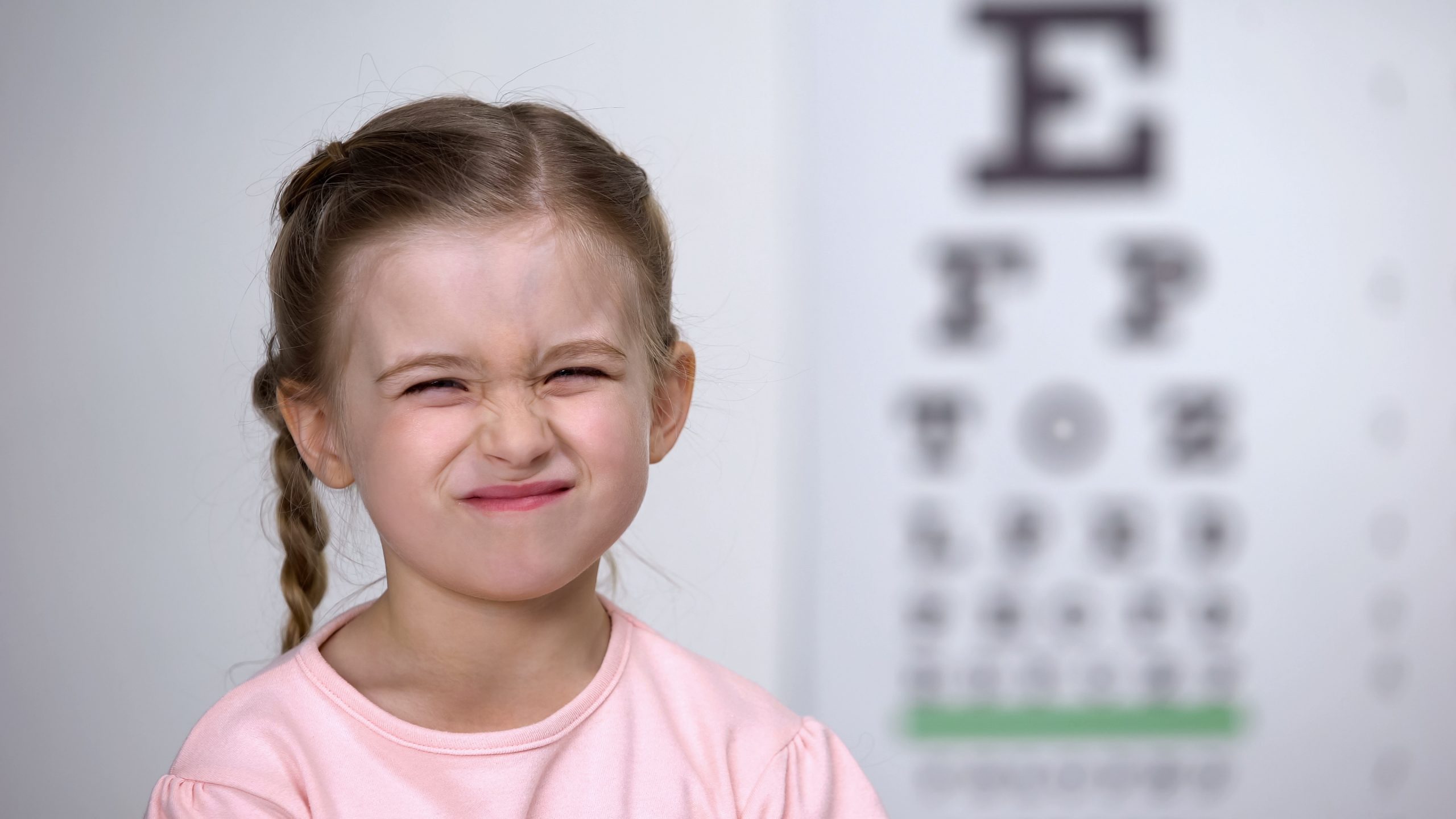
Myopia develops when the eye grows longer than expected, causing light to focus in front of the retina instead of directly on it. This eye growth may begin before a large change appears in a child’s prescription. For this reason, myopia management focuses not only on vision correction, but also on monitoring how the eye is developing over time.
What Causes Myopia?
Myopia develops due to a combination of genetic and environmental factors. Children are at higher risk if one or both parents are nearsighted. Lifestyle factors such as prolonged near work, increased screen time, and limited outdoor time may also contribute. Visual skills, including focusing and eye teaming, can influence how the eyes respond to visual demands during growth.
Each child’s risk profile is unique, which is why myopia management is individualized rather than one-size-fits-all.
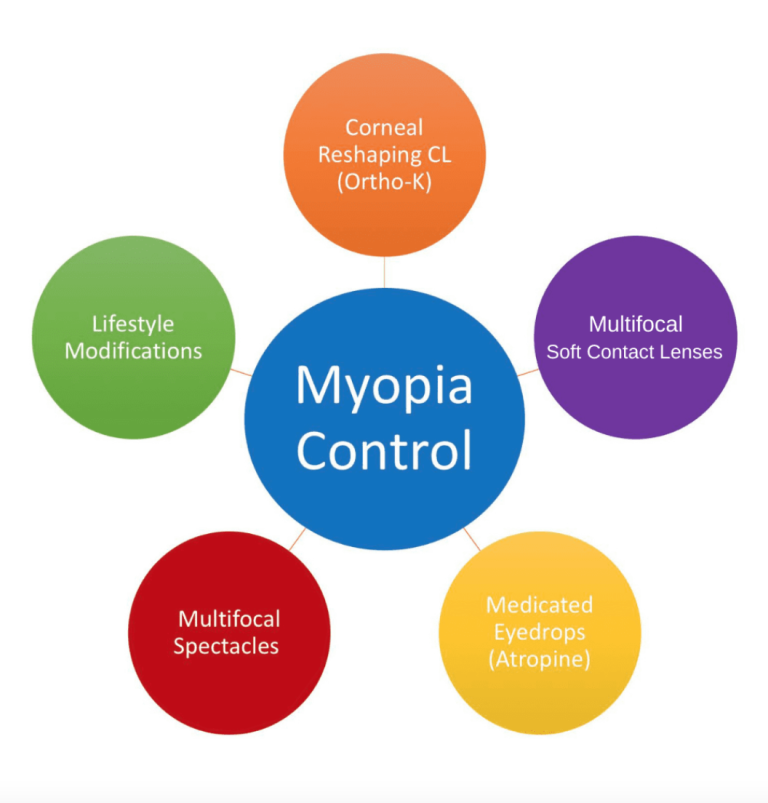
Two hours per day of leisure “close work” (meaning non-school work: close up screen time or book-reading) outside school hours.
Wear specially designed contact lens-like retainers while you sleep, remove when you get up, and you can see without glasses or contact lenses! Research has proven that Ortho-K is effective at slowing progression of myopia (nearsightedness)!
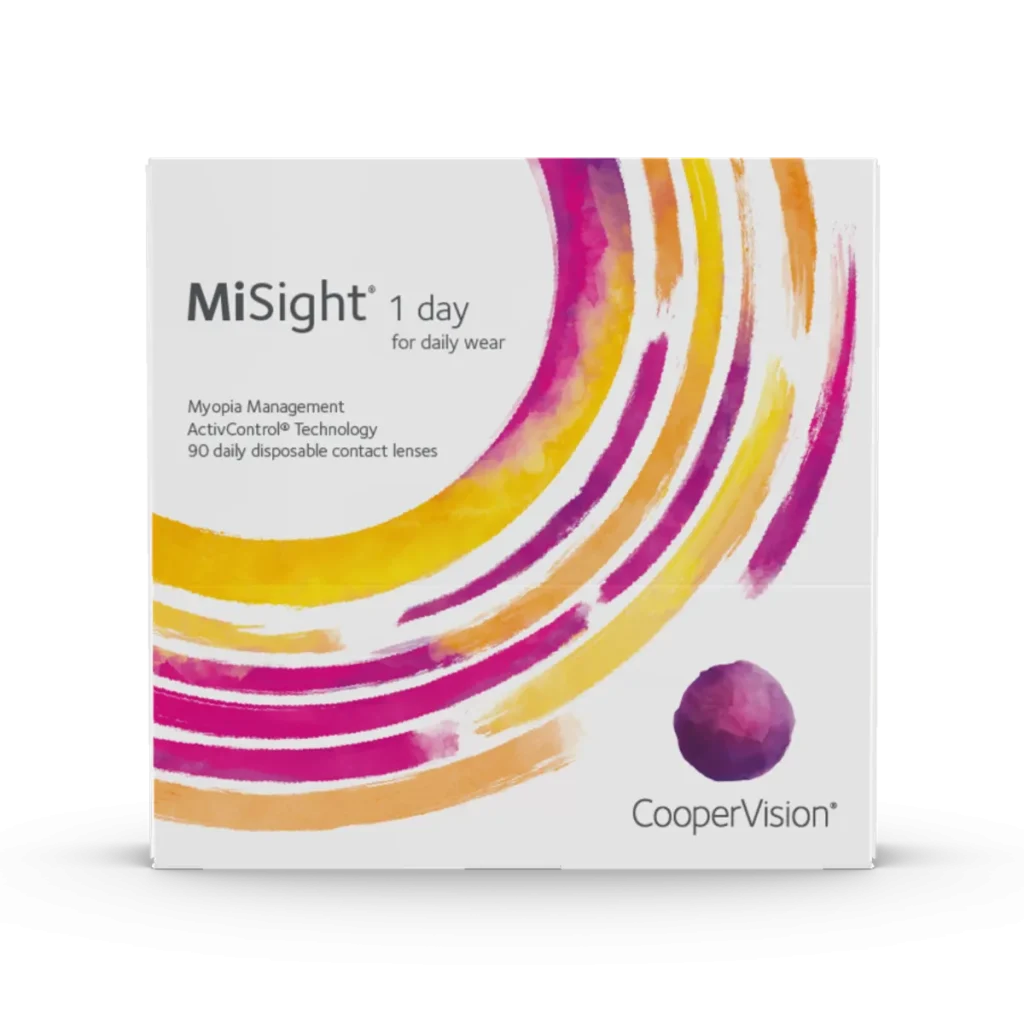
MiSight®1 day is an award-winning 2,3,4 dual-focus soft contact lens that uses ActivControl™ Technology to slow the elongation of the eyeball. The ActivControl™ Technology in MiSight®1 day utilizes an optic zone concentric ring design with alternating vision correction and treatment zones.
Several studies have looked at the positive effects of atropine on myopia control while reducing the concentration and its negative side effects. Lower concentrations of atropine is effective at slowing the progression of myopia without the full strength side effects. Used nightly, low-dose Atropine eyedrops can be a first line treatment or an adjunct to other forms of myopia control.
In children, it’s common for prescriptions for glasses & contact lenses to grow stronger each year. During the ages of 6-12, children’s eyes are growing the fastest. However, there is more to worry about than the inconvenience of ever-thickening lenses.
Myopia Is Progressive
In many children, nearsightedness gradually increases as the eyes grow. This is especially common during the elementary and middle school years, when eye growth tends to occur most rapidly. While stronger prescriptions can be inconvenient, prescription changes alone do not tell the whole story.
As myopia progresses, the eye grows longer and changes shape. Instead of remaining more round, the eye becomes elongated. This structural change is what increases long-term eye health risk—not just the strength of the glasses prescription.
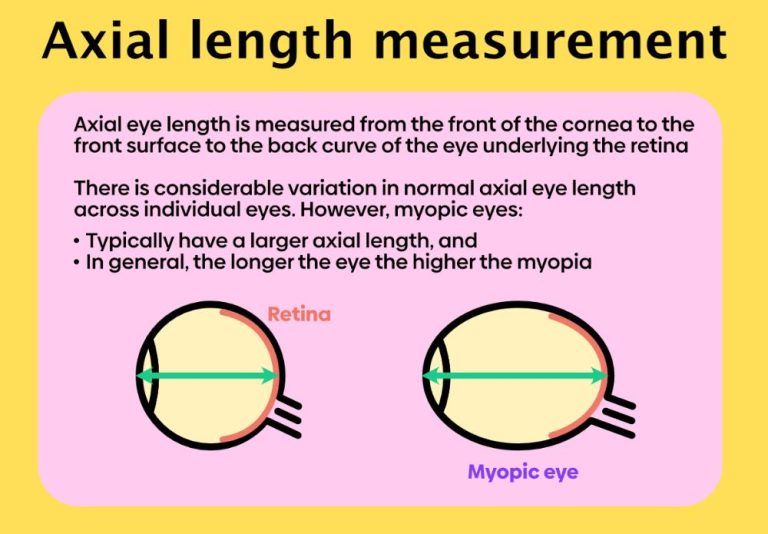
At Family Eyecare Solutions, Dr. Laura monitors myopia by measuring eye length, known as axial length. Tracking eye growth over time helps us better understand how quickly the eye is changing and allows us to make more informed decisions about treatment. In many cases, eye growth can continue even when prescription changes appear small.
Higher levels of myopia and longer eye length are associated with an increased lifetime risk for certain eye conditions, including retinal problems, glaucoma, and cataracts. This is why myopia management focuses on slowing eye growth—not simply improving vision.
Early identification and ongoing monitoring allow us to guide eye development during the years when intervention is most effective. Our goal is to reduce long-term risk while supporting clear, comfortable vision as your child grows.
Why Early Myopia Management Matters?
In many children, the eye begins to grow longer before the prescription changes significantly. A stable prescription does not always mean that myopia has stabilized. Because eye growth contributes to long-term eye health risks, delaying care may mean missing the period when treatment is most effective.
Decisions about myopia management are based on the full clinical picture, including:
- Age of Onset
- Family History
- Eye Growth Measurements
- Rate of Progression
- Visual Habits and Lifestyle
Our goal is not just clearer vision today, but healthier eyes over a lifetime.
A Long-Term, Individualized Approach
Myopia management is a longitudinal process that requires ongoing reassessment, flexibility, and individualized care. As your child grows and their visual demands change, treatment may be adjusted to ensure it remains appropriate and effective.
In simple terms, prescriptions tell part of the story. Tracking eye growth over time often provides the most meaningful insight into future risk and eye health.
Myopia Management Treatment Options
1. MiSight
MiSight® 1 day contact lenses are soft, daily disposable lenses designed specifically for children. They correct nearsightedness while also helping slow myopia progression. The lens design changes how light focuses inside the eye, reducing signals that encourage the eye to grow longer.
Families often choose MiSight because the lenses are easy to use, worn only during the day, and do not require drops or overnight wear. They are well suited for children who are motivated to wear contact lenses and want freedom from glasses during daily activities.
2. Orthokeratology (also called Ortho-k)
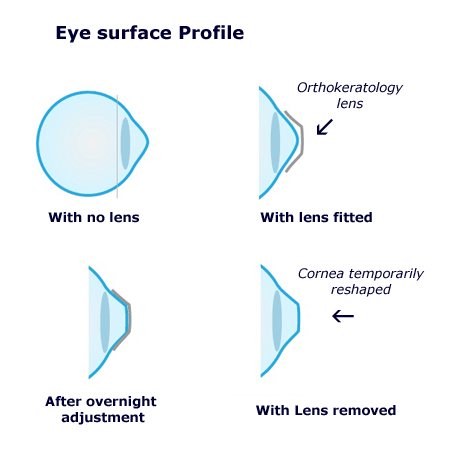
Orthokeratology, or ortho-k, uses custom contact lenses worn overnight to gently reshape the cornea while a child sleeps. The lenses are removed in the morning, allowing clear vision throughout the day without glasses or contact lenses.
In addition to providing glasses-free daytime vision, ortho-k lenses help slow myopia progression by altering how light focuses in the eye, which reduces signals for continued eye growth. This option is often chosen for active children and teens who prefer not to wear correction during the day.
3. Low-Dose Atropine Eye Drops
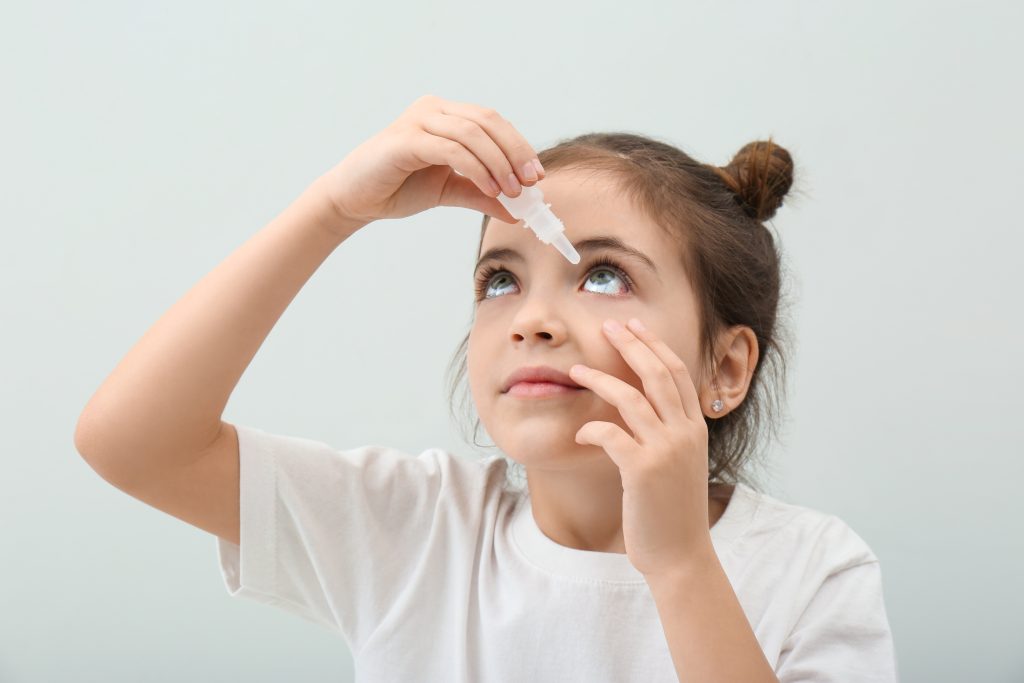
Low-dose atropine eye drops are used nightly to help slow the progression of myopia as a child’s eyes grow. At very low concentrations, atropine can reduce the rate of eye growth while maintaining clear vision and minimizing side effects.
Families often choose low-dose atropine because it is simple to use, safe, and does not interfere with daily visual activities. It may be used alone or in combination with other myopia management strategies, depending on a child’s individual needs.
4. Specialized Eyeglass Lenses (Stellest®)
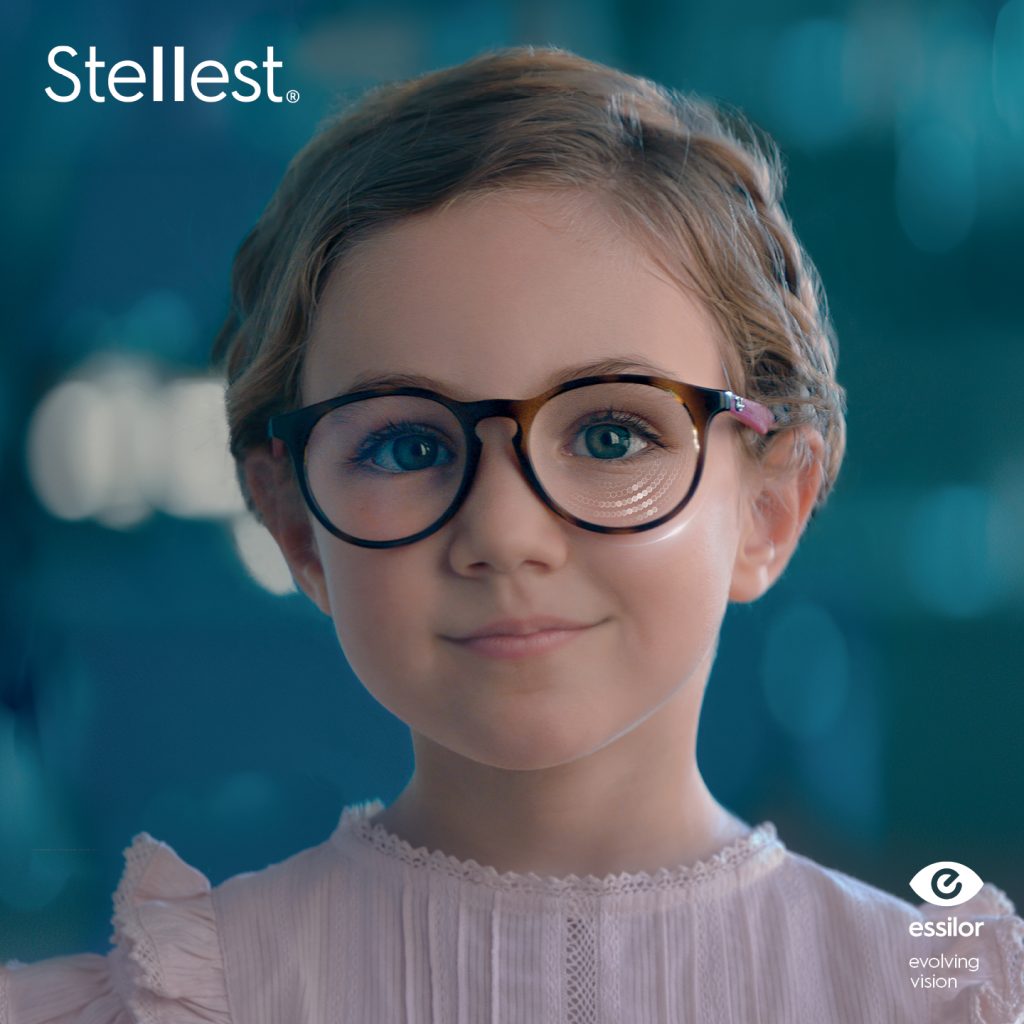
Stellest® lenses are specialized eyeglass lenses designed to correct vision while also helping slow myopia progression. The lenses include a clear central zone for sharp vision, surrounded by treatment zones that guide how light enters the eye to help manage eye growth.
Stellest lenses look and function like regular glasses while offering additional myopia-control benefits. They are often chosen for younger children or families looking for a non-invasive option that does not require contact lenses or eye drops.
Which Option Is Right For My Child?
Choosing a myopia management option depends on many factors, including your child’s age, eye growth pattern, lifestyle, and comfort with glasses, contact lenses, or eye drops. Each option has advantages, and the best choice varies from child to child.
The most important first step is a comprehensive myopia management consultation. During this visit, Dr. Laura evaluates your child’s vision, eye growth, and risk factors, and works with your family to develop a thoughtful, evidence-based plan.
Schedule an Appointment
To schedule a consultation, please contact our office at 781-829-9400