

Vision & Learning Connections
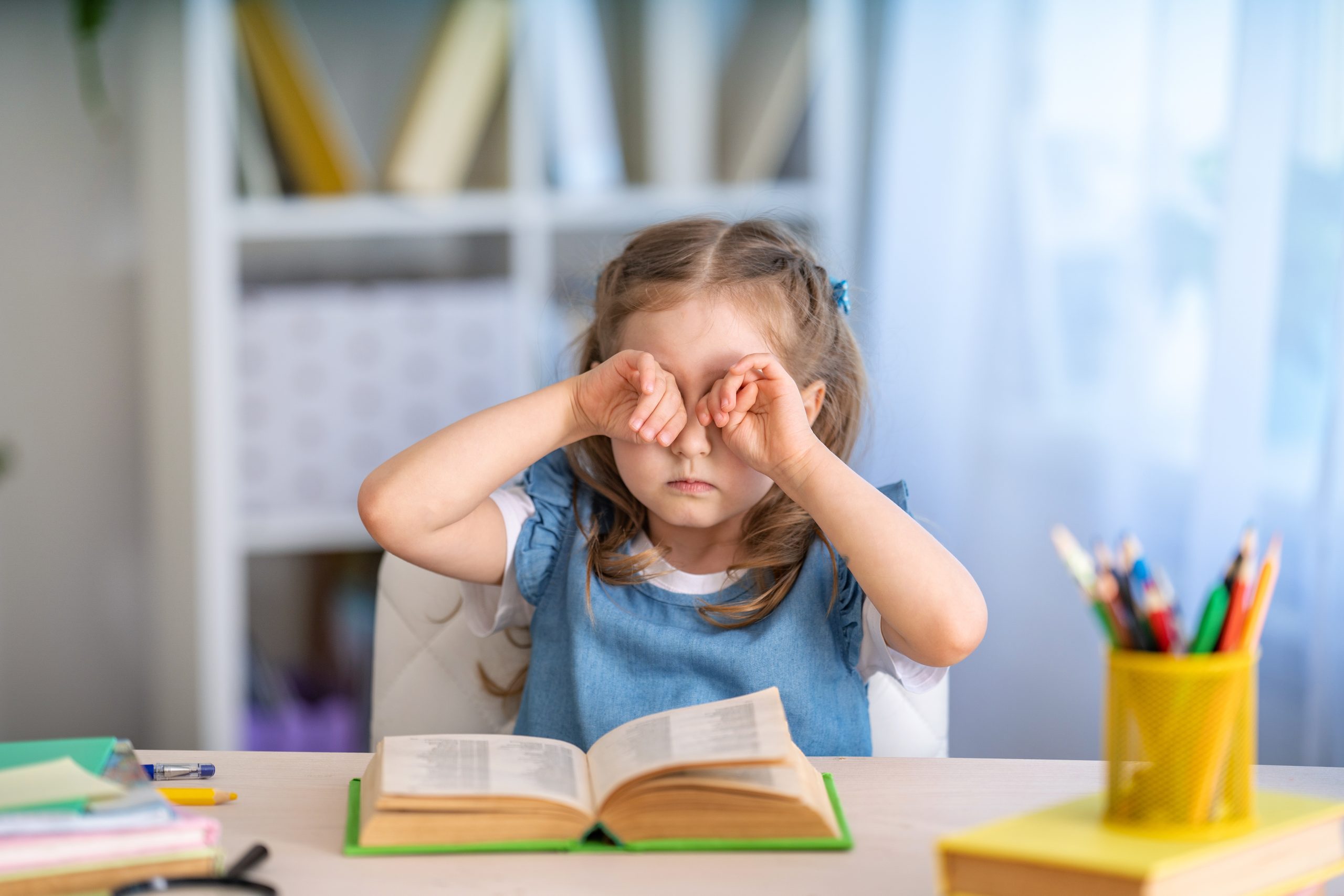
Most children have no idea how they are supposed to see. Therefore it is important that you know the signs that a vision problem is interfering with your child’s ability to read and learn.
According to the American Federation of Teachers vision plays an important role in our children’s education and:
“Even the most gifted students will struggle academically if they have trouble seeing the blackboard or focusing on a book.
A tremendous amount of learning happens visually, so proper vision care is crucial to helping students reach their full potential.”
20/20 Is Not Enough
Vision screenings in school and at the pediatrician’s office usually only test distance vision. Most people think that 20/20 is “perfect vision”, when in fact 20/20 is simply a measurement of what someone is able to see at a distance of 20 feet.
Most of our learning is through reading, which is not at 20 feet at all!
There are 17 visual skills required for reading and learning, including the ability to align the eyes together, to focus the eyes, to move across the page accurately. These skills are often not tested in most vision screenings. Passing a vision screening which tests only distance vision leads parents to believe incorrectly that nothing is wrong.
As a parent, we don’t know what our child sees. We look at them and assume that they have all the visual skills that are necessary for reading and learning because their eyes look fine.
Do You Know Your Vision Facts?
- One out of four children struggle with reading and learning because of undiagnosed vision problems.
- It is estimated that over 60% of problem learners have undiagnosed vision problems.
- 80% of learning in the classroom is visual.
- The majority of the vision problems that interfere with reading and learning are very treatable.
- Seeing clearly (“20/20”) is just one of 17 visual skills critical to academic success.
Dr. Laura, developmental optometrist, specializes in how the eyes and brain work together to perform visual tasks, and how this affects overall development, learning, and coordination. A general optometrist is concerned mainly with the clarity of eyesight (how well you see) and basic eye health (prevention and management of common eye diseases). They typically don’t focus on more complex visual problems related to development, learning, or coordination. The routine eye exam is not designed to test ALL of the 17 visual skills required for academic success.
If any of these visual skills are not working properly, it can make reading and learning an unnecessary challenge. Some children develop behavior problems, while others avoid reading or simply refuse to read. Usually the child is bright, causing parents to be confused by the child’s difficulties. Often the child is labeled hyperactive, lazy, or slow. What makes this even worse is that many of these problems can easily be mistaken as learning disabilities or attention problems such as ADHD (Attention-Deficit/Hyperactivity Disorder).
Schedule an Appointment
If your child struggles with reading or learning, call our office to schedule an appointment today by contacting our office at 781-829-9400